New vs Used Car Loans 2026: Pros, Cons, Interest Rates & Which One Saves You More Money Long-Term
Deciding between a new or used car is one of the biggest financial choices Americans face in 2026. With average new car prices still high (~$48,000+) and used inventory more stable, the right choice depends on your budget, credit, driving needs, and long-term costs — including loans and insurance.
Here’s a detailed, data-driven comparison using June 2026 rates from Bankrate, LendingTree, Experian, and major lenders.
Current Rates Snapshot (June 2026)
| Credit Tier | New Car Avg APR | Used Car Avg APR | Best New (Credit Union) | Best Used |
|---|---|---|---|---|
| Super Prime (781+) | 4.66% | 7.70% | 3.39% (PenFed) | 4.34% |
| Prime (661-780) | 6.27% | 9.98% | ~4.5–5.5% | ~6–8% |
| Subprime | 9.57%+ | 14.49%+ | Higher | Higher |
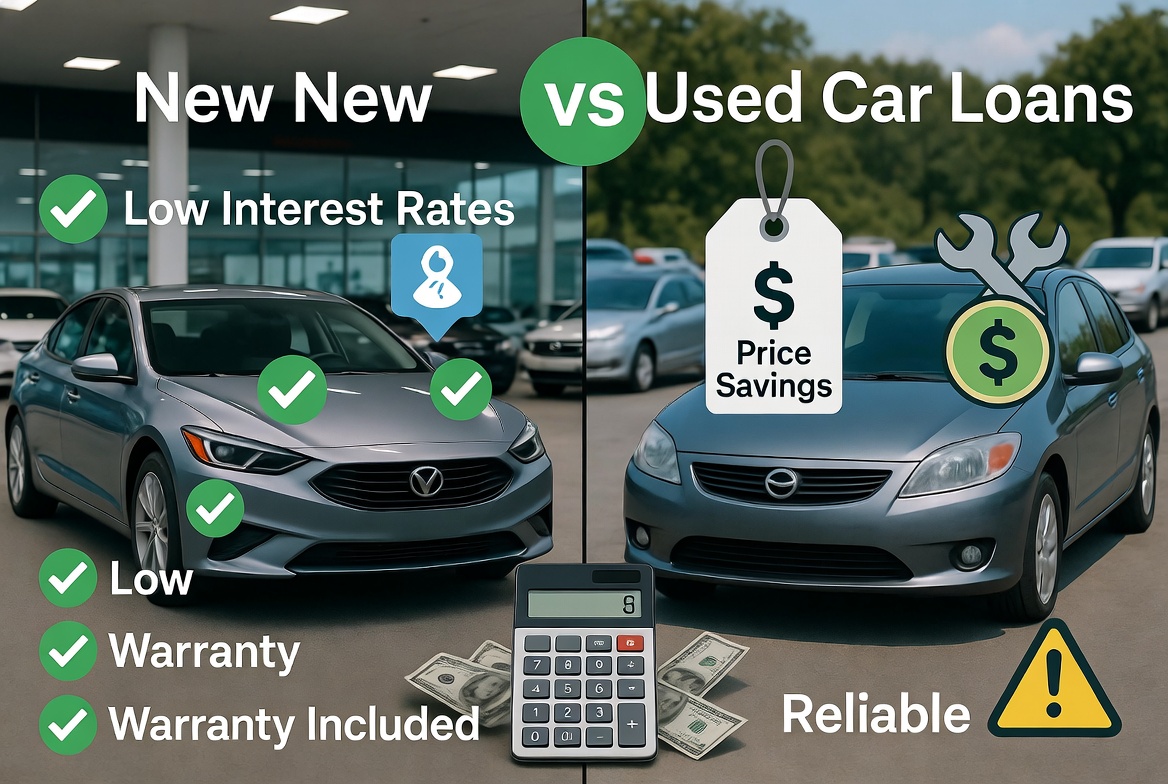
New cars generally qualify for lower interest rates because they’re lower risk for lenders (better condition, warranties).
Pros & Cons of New Car Loans
Pros:
- Lower APRs (often 1–3% better than used).
- Full manufacturer warranty (reduces repair worries).
- Latest safety/tech features.
- Easier financing approval.
- Possible manufacturer incentives (low-rate or cash-back deals).
Cons:
- Higher purchase price → larger loan amount.
- Faster depreciation (20–30% in first year).
- Higher insurance premiums often.
- More likely to be upside down early in the loan.
Best for: Higher credit scores, buyers who keep cars 5+ years, or those wanting reliability/warranty.
Pros & Cons of Used Car Loans
Pros:
- Significantly lower purchase price (often 30–50% less).
- Slower depreciation after initial years.
- Lower overall insurance costs in many cases.
- More affordable monthly payments for the same quality level.
Cons:
- Higher interest rates.
- Potential hidden repair costs (no/full warranty).
- Harder to finance very old/high-mileage vehicles.
- Greater risk of mechanical issues.
Best for: Budget-conscious buyers, those with good but not perfect credit, or shorter ownership periods.
Total Cost Comparison Example (2026 Realistic Scenario)
Scenario: $35,000 budget, 720 credit score, 60-month loan.
- New Car ($42,000 sticker after incentives, $35k financed after down payment): 4.5% APR → ~$654/month, total interest ~$4,240.
- Used Car ($28,000 reliable model, $25k financed): 7.0% APR → ~$495/month, total interest ~$4,700.
Winner? Depends — the used option has lower monthly and upfront cost, but similar interest. Over 5 years, factor in repairs (~$1,500–$3,000 extra possible on used) vs new car depreciation.
Long-term math: Buying new and keeping 7–10 years often wins on total ownership cost. Trading every 3–4 years favors used.
Loan Term, Down Payment & Insurance Impact
- New cars: Lenders more willing for longer terms (up to 84–96 months).
- Used cars: Stricter, especially for older models (max 72–84 months often).
- Insurance: New cars can cost 10–20% more to insure due to repair costs.
- Gap insurance more critical on new financed vehicles.
When to Choose New in 2026
- Excellent credit + stable income.
- Want warranty and low maintenance.
- Plan to keep the car long-term.
- EV incentives/tax credits available on qualifying new models.
When to Choose Used in 2026
- Budget under $30k.
- Want lower monthly payments.
- Comfortable with certified pre-owned (CPO) programs for some warranty.
- Private party or CPO deals with pre-purchase inspection.
Actionable Tips for Either Choice
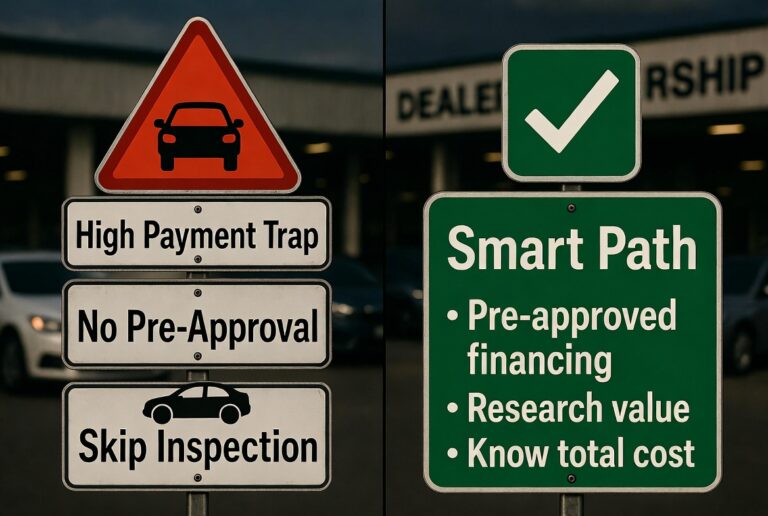
- Get pre-approved first (credit unions best).
- Use tools like Edmunds/KBB for fair pricing.
- Always get a vehicle history report (Carfax) for used.
- Budget 20–25% down payment when possible.
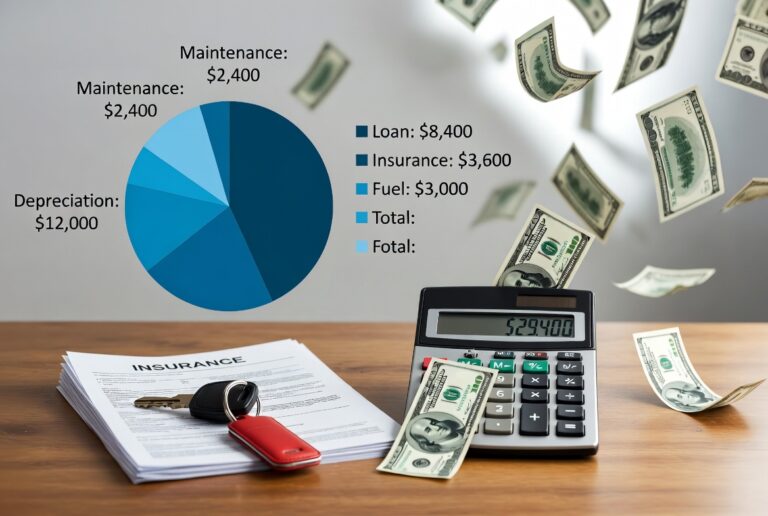
- Compare total 5-year ownership cost (loan + insurance + fuel + maintenance + depreciation).
- Consider certified pre-owned used for best of both worlds (lower price + some warranty).
Bottom Line for 2026
New cars win on financing costs and peace of mind but lose on upfront price. Used cars win on affordability but require more due diligence.
For most middle-income Americans, a well-maintained used or CPO vehicle financed through a credit union often provides the best value — saving thousands compared to new while avoiding the highest used-car rate penalties.
Calculate your personal numbers and shop smart. The biggest mistake is rushing without comparing both options side-by-side.